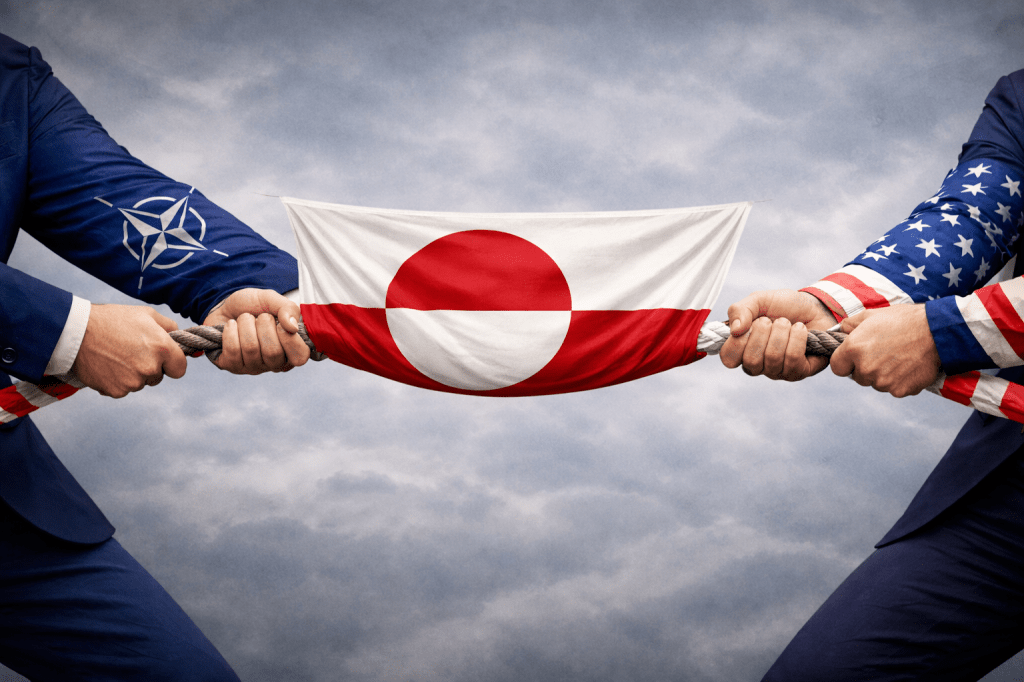
The strategic reality is stark: the United States will acquire Greenland. Since returning to the office, President Trump has made this unambiguous. In January 2026, Trump declared, “We are going to do something on Greenland, whether they like it or not, and that he would like to make a deal “the easy way, but if we don’t do it the easy way, we are going to do it the hard way. Underlying the seriousness of the situation, it has recently been reported that Trump has ordered his special forces commanders to draw up a plan for the invasion of Greenland.
President Trump argued that the U.S ownership of Greenland will results in a different level of commitment to the defence of the territory then one leased. A parallel to this would be the sinking of the USS Panay in 1937, an attack on American naval forces that killed three sailors, did not trigger American military response. Attacks on the Philippines, Guam, and Wake Island followed suit. But Pearl Harbor did. Trump’s logic, however crudely expressed, contains a strategic insight: attacks on US territory trigger automatic domestic political response in ways that attacks on allied territory may not. For American security planners, the question is not whether to acquire Greenland, but through what mechanism. For European policymakers, the question is more urgent: if this is inevitable, how do they prevent this acquisition from destroying NATO? The answer lies not in confrontation, but in respecting a democratic process that is already underway.
The Strategic Reality: Why This Matters
Arctic competition with China and Russia has made Greenland strategically vital. Greenland’s position, mineral resources, and Arctic access make it essential to American great power strategy. This is not negotiable from the American perspective. The question confronting European policymakers is not whether the United States will pursue control of Greenland, but through what pathway and what collateral damage that pathway inflicts on the Western alliance. The costs of direct confrontation are severe. If the US attempts to acquire Greenland while it remains Danish territory under NATO protection:
- NATO faces institutional collapse. Article 5 either triggers (requiring European militaries to defend Greenland against the US, an alliance-ending scenario) or fails to trigger (destroying the credibility of collective defense). Either outcome fractures NATO’s core purpose.
- The transatlantic relationship ruptures. Military confrontation between the US and European NATO over Greenland creates permanent damage to the alliance that depends on American security commitment to Europe. This damage occurs precisely when Europe faces mounting Russian pressure and Chinese economic competition.
- Europe’s security architecture crumbles. NATO is not merely a military alliance; it is the foundational institution of European security. A US-NATO military confrontation over Greenland would fundamentally undermine the alliance that has protected Europe for 75 years and remains essential for deterring Russian aggression in Eastern Europe and the Baltic states.
- Russia gains strategic advantage. While the US and Europe are locked in confrontation over Greenland, Russia consolidates gains in Ukraine, pressures the Baltics, and operates without coordinated Western resistance. China accelerates its Indo-Pacific expansion. The global balance shifts against Western interests.
These are not abstract concerns. They represent the genuine strategic catastrophe that direct confrontation would produce. The question for European policymakers is whether preserving Greenland’s status as Danish territory is worth destroying the NATO alliance that keeps Europe secure.
The Democratic Pathway: Greenlandic Self-Determination
Greenland is moving toward independence. This is not a theoretical possibility but an evident political reality:
- 84 percent of Greenlanders favor independence from Denmark (January 2025 polling)
- 56 percent would vote for independence in an immediate referendum
- All six major Greenlandic political parties advocate independence, differing only on timing and economic preconditions
- In March 2025 elections, voters elected the center-right Demokraatit (Democrats) party, which supports independence contingent upon economic strengthening
Greenlandic independence is not being imposed externally. It reflects authentic political sentiment grounded in national identity, resource autonomy and self-governance aspirations. Importantly, Greenland possesses legal authority to declare independence unilaterally under its 2009 Self-Government Act. A referendum simply provides democratic legitimacy to a sovereignty transition already supported by broad Greenlandic political consensus. This is the foundation for a strategic pathway that preserves NATO while respecting democratic choice.
The mechanism is straightforward:
A referendum on Greenlandic political status with three explicit options. Greenlanders would vote on three futures: remain part of Denmark, join the United States or become an independent nation. This transparent presentation of options allows genuine democratic choice, but also a de-escalation path for Europe and the US should Greenland vote for independence.
- Europe publicly supports Greenland’s right to choose its future. This aligns with stated European values of self-determination and respects the evident will of the Greenlandic people. It positions Europe as defending democratic principles.
- The United States openly pursues Greenlandic partnership. The US does not hide its strategic interest. It competes transparently for Greenland’s future alignment.
- Greenlanders vote. A referendum on political status allows Greenlanders to decide their future. The outcome, based on current polling, is likely independence.
European Leader Statements: The Public Record of Opposition
European opposition to unilateral US action on Greenland is now explicit and on record. This public opposition creates significant political cost for any NATO member considering military action in the current context. However, the independence mechanism eliminates this cost by fundamentally changing the legal and institutional basis of the situation:
- Danish PM Mette Frederiksen (January 2026): Stated that if the US “chooses to attack another NATO country militarily, everything stops, including NATO”
- German Chancellor Olaf Scholz (January 2025): Posted that there is “uneasiness regarding recent statements from the US”
- French Foreign Minister and European leaders: Warned against threatening EU borders
- Joint EU statement (January 2026): Leaders from France, Germany, Italy, Poland, Spain, Britain, and Denmark declared: “Greenland belongs to its people. It is for Denmark and Greenland, and them only, to decide”
This record of explicit opposition demonstrates why the institutional mechanism matters strategically. Direct military action against Danish territory would trigger these stated objections, creating alliance tension and political cost. But action against an independent Greenland territory (following a democratic referendum) changes the equation entirely. The democratic legitimacy of Greenlandic independence removes the legal and political basis for NATO opposition. Europe cannot claim to defend self-determination principles while simultaneously opposing Greenlanders’ choice to become independent. NATO’s Article 5 obligation becomes moot. Once Greenland is independent, it is no longer automatically part of NATO’s collective defence framework. NATO member states have no obligation to defend non-NATO territory. Both the US and European NATO members agree to this principle.
The US pursues Greenlandic partnership post-independence. Whether through security agreement, economic integration, or eventual statehood, the US and an independent Greenland negotiate their relationship directly without involving NATO. This pathway achieves what direct confrontation cannot:
- Greenland exercises genuine self-determination. Greenlanders make their own choice about their future, with the opposition leader already calling for direct engagement with the US without Denmark.
- NATO remains intact. European NATO members do not face the impossible choice of defending Greenland against the US or watching Article 5 collapse.
- The transatlantic relationship survives. No military confrontation, no institutional rupture, no precedent for violating alliance commitments.
- Democracy legitimizes the outcome. Both the US and Europe can accept the result as reflecting Greenlandic choice rather than great power imposition.
The Cost-Benefit for Europe: Why Accept This?
The honest answer is: Europe has no capacity to prevent US acquisition of Greenland, and confrontation over it would destroy the institution that protects European security. Europe cannot militarily prevent US control. Denmark’s active-duty military is smaller than the New York City Police Department. No credible NATO member can defend Greenland against determined American action. Military confrontation is not an option; it is a catastrophic mistake.
Confrontation destroys NATO. If the US moves on Greenland and Europe responds militarily, the institution collapses. More likely, Europe capitulates after a failed show of resistance, which also destroys NATO’s credibility. Either outcome is disastrous for European security at a moment when Russian pressure on Europe requires unified Western response.
But this pathway preserves what matters: NATO remains intact. European security architecture survives. The US-Europe relationship, strained though it may be, does not rupture. The alliance that has protected Europe from Russian expansion continues to function. Moreover, Europe should extracts a price for cooperation. In accepting this outcome, Europe is positioned to demand stronger security guarantees from the United States. This creates an opportunity to extract more robust and more explicit security commitments from an American ally that is growing distant by the day. What Europe negotiates, whether enhanced military presence in Eastern Europe, explicit security guarantees for the Baltics, renegotiated burden-sharing arrangements, or accelerated military support for Ukraine should reflect Europe’s leverage in shaping the outcome. Europe is not capitulating without compensation, it is strategically disengaging on one side while furthering priorities interests where it matters most.
The question for European policymakers is stark: Is preserving Greenland’s status as Danish territory worth destroying NATO, fracturing transatlantic relations, and leaving Europe exposed to Russian expansion without unified Western support? The answer, from a strategic standpoint, is clearly no.
The Risk of Confrontation: What Europe Would Lose
To understand why accepting this pathway is rational, consider what confrontation would cost:
Scenario A: Military Confrontation
If the US moves militarily on Greenland and European NATO members respond:
- Direct US-NATO military conflict occurs
- NATO’s foundational principle (collective defense) faces its ultimate test
- The alliance either fractures (members refuse to fight the US) or breaks (members fight the US and lose)
- European security collapses without NATO
- Russia, sensing Western division and weakness, presses advantage in Ukraine and Baltics, and very likely further
- China accelerates expansion in Indo-Pacific knowing the US is distracted by alliance rupture
- Europe faces simultaneous pressure from Russia and internal NATO collapse
This is catastrophic for European interests.
Scenario B: Diplomatic Confrontation Without Military Response
If Europe protests US acquisition diplomatically but does not militarily resist:
- The US acquires Greenland regardless
- Europe appears weak and divided (some members want to fight, others want to negotiate)
- NATO’s credibility is damaged (Article 5 was not honored)
- Allies like Taiwan, Ukraine and the Baltics question whether US security guarantees mean anything
- Russia and China interpret European weakness as opportunity
- The transatlantic relationship enters years of tension and distrust
- NATO’s coherence as a deterrent to Russian aggression is permanently compromised
This is still damaging to European security.
Scenario C: Accepting the Democratic Pathway
- NATO remains intact
- US-Europe relations survive the transaction
- Article 5 remains credible for territories where it actually applies
- Europe extracts security concessions from the US in exchange for cooperation
- Russia and China see a unified West, not an alliance in collapse
- European security is preserved, albeit at the cost of Greenland
Scenario C is the only option that serves European strategic and security interests.
What This Requires: Coordinated European Response
For this pathway to work, Europe must:
- Publicly state support for Greenlandic self-determination. Make clear that Greenland’s choice, whatever it is, will be respected by NATO and European members. This removes the appearance that Europe is abandoning Greenland and frames the outcome as democratic rather than great power imposition. Distancing Europe (by extension NATO) from the Greenland issue in a supportive manner.
- Make explicit that Article 5 does not apply to independent states outside NATO. Clarify that if Greenland votes for independence, NATO has no obligation to defend it. This prevents the institutional trap that creates confrontation.
- Negotiate security guarantees from the United States in advance. Use Europe’s cooperation in this process to extract enhanced American commitment to European security: stronger military presence in Eastern Europe, explicit security guarantees for the Baltics, accelerated military support for Ukraine or renegotiated burden-sharing that favors European security priorities.
- Present this as respecting Greenlandic democracy, not as accepting strategic loss. The narrative should emphasize that Europe trusts Greenlanders to make their own choice and respects that choice, even if the outcome is independence.
The Alternative: Is Europe Willing to Lose NATO?
This is the question that should frame European decision-making. Is Greenland worth:
- The destruction of NATO’s collective defense framework?
- The rupture of transatlantic security relations?
- The loss of deterrence against Russian expansion in Eastern Europe?
- The undermining of security guarantees to Ukraine, the Baltics, and other vulnerable states?
- The exposure of Europe to further pressure from Putin without unified Western support?
- Potential military conflict between NATO members and the United States?
The answer, from any rational strategic perspective, is no. Greenland is not worth any of these costs, much less all of them.
Conclusion: The Price of Alliance – Historical Precedent
NATO has repeatedly required member states to accept losses they would prefer to avoid. Turkey’s 1974 intervention in Cyprus placed NATO member Greece in a position of strategic loss—yet the alliance survived and both nations remained members. France’s loss of Indochina in the 1950s demonstrated that alliance members manage involuntary territorial losses and continue as core NATO contributors. Britain’s acceptance of US pressure during the 1956 Suez Crisis showed that even major powers accept constraints on unilateral action to preserve alliance coherence.
These precedents establish a pattern: NATO members have historically absorbed significant strategic losses—military defeats, territorial changes, diminished regional influence—because the alternative (alliance fracture) was worse. Greenland represents a similar calculation. The loss is likely inevitable given US strategic interests, military asymmetry, and Greenlandic independence sentiment. The question is not whether to prevent it, but whether to manage it in a way that preserves NATO. History suggests alliances are resilient when members accept necessary losses. The question for Europe is whether it will learn this lesson willingly or have it imposed through confrontation. The price of alliance is accepting that not every piece of territory can be retained when an allied great power determines it is essential to its security.
Greenland will likely become independent. When it does, the United States will seek to integrate it into American strategic positioning, the easy way or the hard way. Europe’s choice is not whether this happens, but through what mechanism and at what cost to Western institutions. Direct confrontation would undermine NATO at a moment when Europe depends on it the most. It would fracture the transatlantic relationship when a unified Western response to Russian and Chinese pressure is essential.
The democratic pathway preserves what matters. NATO survives. The transatlantic relationship survives. Europe extracts security concessions from the United States. Greenlandic self-determination is respected. The outcome is achieved without institutional catastrophe.
This is the reality of great power politics. But the price of refusing this pathway, the destruction of NATO, the fracture of transatlantic relations, and the exposure of Europe to Russian expansion, is far higher. For European policymakers, the question is whether preserving Greenland’s current status is worth losing NATO. The strategic answer is clear. The diplomatic pathway exists. The question is whether European leaders can recognize it and will pursue it.
 Nathan Mukoma
Leave a comment