
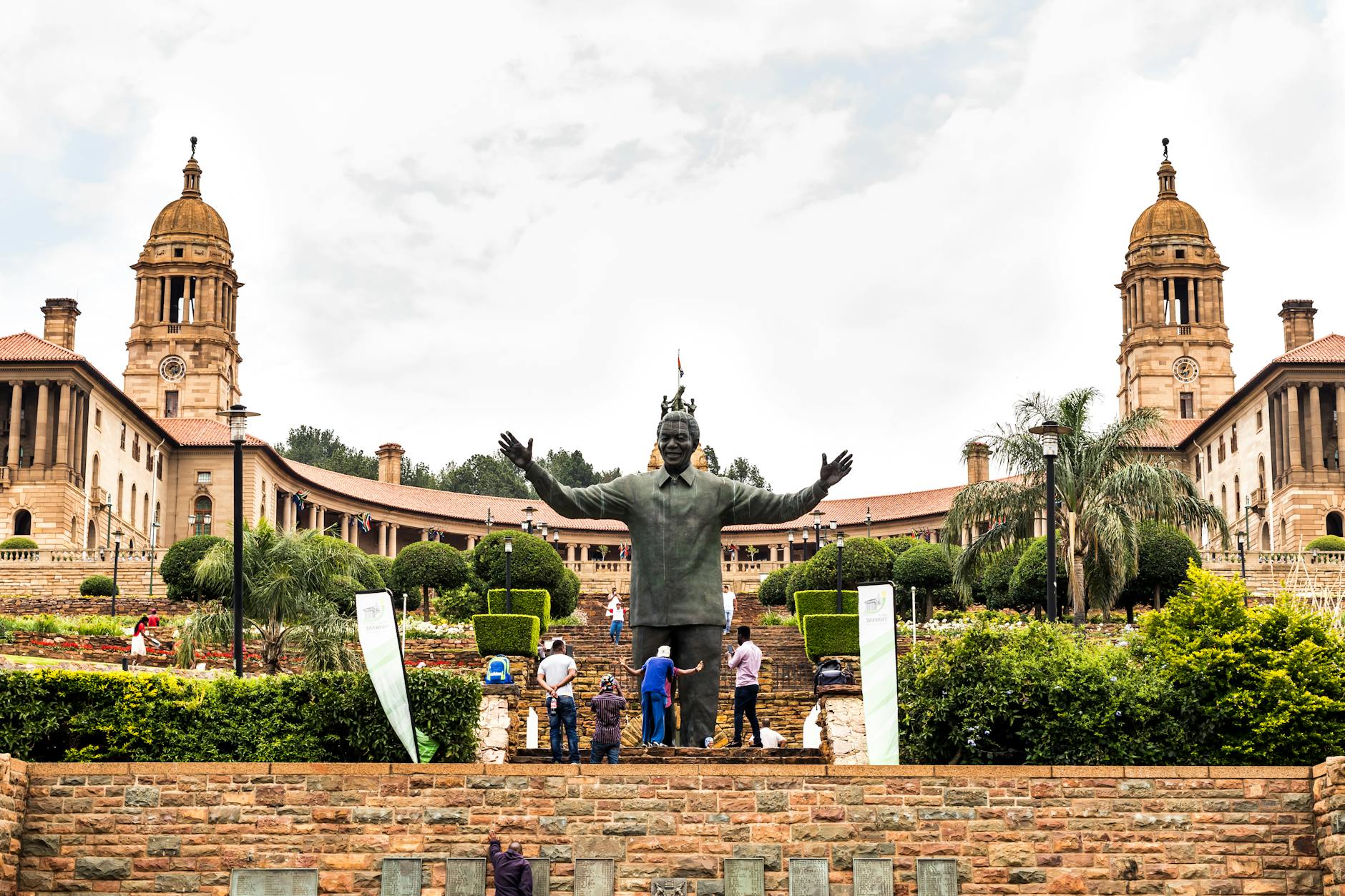
South Africa recently held elections that marked a significant shift in the country’s political landscape. The African National Congress (ANC), the party that has dominated the country’s politics since the end of apartheid, lost its majority grip on power for the first time in 25 years with only 40.18% of the total vote. The Democratic Alliance (DA) received the second highest number of votes at 21.81%, followed by the MK party at 14.58% and the EFF at 9.52%, and the rest is shared between other parties[1]. As a consequence, the ANC has no other choice but to forge a coalition to govern and this is where the dilemma starts. Intense speculations have emerged over the potential choice of coalition partners the ANC is leaning toward at the national level. But overall, there are seemingly three options it is faced with:
- An ANC-DA-IFP coalition
- An ANC-EFF-MK coalition
- An umbrella with as many parties as possible
Regardless of the choice made, this will have drastic implications in terms of national governance, public policy and/or foreign policy.
On Foreign policy…
The ANC’s recent biggest achievement on this end was bringing a genocide case against Israel’s actions in Palestine in front of the International Criminal Court. This move saw South Africa make a strong return on the International scene as the worldwide Champion of human rights it once was in the post-apartheid era until Zuma’s era. But at the national political level, this decision was not shared by all political parties and was heavily criticised by some. Historically, the ANC has maintained stronger ties with the global South, particularly Africa and the BRICS nations (Brazil, Russia, India, China and South Africa). It has prioritised South-South Cooperation and multilateralism. An alliance with the EFF and MK party would not cause a drift from this ideological position. If anything, it might lead to a deeper commitment down this path with the influence of a party like the EFF, which advocates for a more radical anti-imperialist approach and deeper South-South Cooperation.
While the MK party is quite new, its founder ‘Jacob Zuma’ also led South Africa’s joining of BRICS during his presidency in 2009. As such, it can easily be speculated what his party will lean towards. This is even more evident when it comes to South Africa’s position on the Russia-Ukraine issue. So far, the ANC has taken great care in attempting to present a semblance of neutrality on this question calling for a peaceful resolution and emphasizing de-escalation. The MK party on the other end has made it clear in its manifesto that it would stand in solidarity with Russia, going as far as calling Vladimir Putin a ‘man of peace’[2]. Ironically, the two parties who seemed the most unable to find common ground (the DA and the EFF) found it in their stance on Russia’s actions in Ukraine. They have both condemned Russia’s action as ‘aggression’ and a ‘violation of international law’, with the EFF comparing Russia’s actions to Western imperialism and hypocrisy staying consistent with its wider anti-imperialist stand. And the DA supports sanctions on Russia, advocates for a tougher stance and has been critical of the ANC’s reluctance to condemn Russia.
A position that is not too dissimilar to that of the IFP, perhaps with minor nuance differences. Unlike the EFF stands on the Israeli-Palestinian conflict, the DA and the IFP stands have been more neutral with perhaps more leaning toward Israel at times when it comes to the DA. Both parties also have taken a pro-Western stance traditionally and advocate for stronger ties with the West but also shared critics of the ANC’s close ties with regimes seen as authoritarian. Another significant area of potential clash would be South Africa’s military intervention in the DRC, which the DA and the EFF have vehemently opposed in the past. As the death toll of SANDF soldiers climbs, it is unavoidable that tensions in the ANC-chosen coalition also will.
The Wild card would be a coalition with an umbrella of parties and the uncertainty it may bring. But whatever the final tally will be, It will likely be the end of South Africa’s pretend non-alignment approach or a deeper slide down that path caused by decision paralysis as a foreign policy compromise. Ultimately, whatever this new government of national unity may look like. The ANC may find itself having to play the role of the most moderate party in whichever coalition it chooses. In case of a coalition with the DA, the IFP will be burdened with the role of having to be the voice of reason or the middle ground. As such, to avoid this constraint, foreign policy decision-making must be Issue-based and not based on ideology, as there is almost always ground for agreement. If the DA and EFF can find common ground on their stance on the Russian war in Ukraine, there ought to be a glimmer of hope that foreign policy deadlocks can be resolved.
[1] https://results.elections.org.za/dashboards/npe/
[2] https://www.ft.com/content/4b88d21b-a882-43ef-846d-fc13870faee9
 Nathan Mukoma
Leave a comment